Saturday, January 06, 2007
GUYON Ancestry=DION, DESPRÈS, DUMONTIER, LEMOINE, DERBANNE
Thursday, January 04, 2007
Age of adulthood in QC through the centuries
From 1620 to 1783 = 25 years of age
From 1783 to 1972 = 21 years of age
Friday, December 15, 2006
TANGUAY Genealogy Dictionary online

I've just found the TANGUAY dictionnaire généalogique des familles canadiennes online. This will certainly be of great help to many of you researchers, who don't own the dictionary nor that of JETTÉ. It lists the founders of NEW FRANCE (QUÉBEC) and their descendants for the period of 1608-1760.
Please note the following abbreviations that you will find in this French dictionary:
Wednesday, December 06, 2006
BILODEAU Descendants
1) Father GASTON BILODEAU, b. 1934 in Saint-Patrice-de-Beaurivage, Lotbinière County, QC;
2) ADRIENNE BILODEAU (1905-2006), wife of JOSPEH CADRIN;
3) JOEPH BILODEAU, b. 1900-08-09 in Saint-Pamphile, L’Islet County, QC, d. 1976-10-25 in Sainte-Foy, suburb of Québec City, QC;
4) Wedding photo of FERNAND BILODEAU de VIMY and SOLANGE BOISSONNAULT who married 1959-08-28
Tuesday, November 28, 2006
Homosexual marriages legal in CANADA
Catholic ministers cannot celebrate
exclusively civil marriages
CONSIDERING that a new definition of marriage has been adopted by the Federal Government on July 20,2006;
CONSIDERING as a follow-up to this decision, that Québec bishops, in plenary assembly, deemed it advantageous to remain under the present regime whereby the State grants civil effects to marriages performed in the Catholic Church;
CONSIDERING these civil effects are inseparable from the religious celebration of marriage in accordance with the canonical and liturgical standards in force;
WE WISH TO REMIND the statement of Bishop of Saint-Jean-Longueuil that ministers of the Catholic Church are prohibited from performing marriages that are exclusively civil. Departure from the rule may cause the withdrawal of celebrant’s permit. You may wish to consult page 107 of the Canonical and Pastoral Guide for Parishes on the subject, published by the AQCB.
Jean-Pierre CAMERLAIN, priest
Chancellor
Wednesday, November 15, 2006
OBIT: Isabelle PINEAU (1931-2006)
The funeral was held November 10 at the parish church of Sainte-Catherine.
Antoine PINEAU
Catherine ST_LAURENT
1783-07-15
St-Germain parish, Rimouski, Rimouski County, QC
Antoine PINEAU
Ursule CÔTÉ
1813-01-12
St-Germain parish, Rimouski, Rimouski County, QC
Jean-Baptiste PINEAU
Marguerite LAMONTAGNE
1852-02-17
St-Germain parish, Rimouski, Rimouski County, QC
Achille PINEAU
Victore THERRIAULT
1878-01-08
St-Anclet-de-Lessard, Rimouski County, QC
Ildefonse PINEAU
Léa DESCHAMPS
1926-09-11
St-Anclet-de-Lessard, Rimouski County, QC
Isabelle PINEAU
Adélard SOUCY
1948-07-22Saint-Marcellin, Rimouski County, QC
Thursday, October 26, 2006
Abbé Lucien ROY
Lucien ROY, born in 1913, died June 11, 2006 In Longueuil, Montérégie Region, QC. He was ordained to the Roman Catholic priesthood by Msgr. Anastase FORGET on June 25, 1939. From 1954 up to his retirement in 1977, he was pastor of the parish of Saint-Paul-de-Île-aux-Noix, Montérégie Region, QC. On June 16, 2006, Msgr. Jacques BERTHELET, C.S.V. presided at the funeral mass in the co-cathedral of Saint-Antoine-de-Padoue, Longueuil, QC.ROY
(1)
Louis LEROY
Anne LEMAISTRE
1638-04-27
Dieppe, Normandie, FRANCE
(2)
Nicolas LEROY
Jeanne LELIÈVRE
1658-02-01
Dieppe, Normandie, FRANCE
(3)
Noël ROY
Marguerite RABOUIN
1700-04-27
Saint-Famille (Île-d’Orléans), Montmorency County, QC
(4)
Pierre ROY
Françoise DALLAIRE
1763-09-19
Beaumont, Bellechasse County, QC
(5)
Eustache ROY
Madeleine CHABOT
1763-09-19
Saint-Laurent (Île-d’Orléans) Montmorency County, QC
(6)
Eustache ROY
Marie-Victoire FORTIN
1793-04-15
Saint-Vallier, Bellechasse County, QC
(7)
Eustache ROY
Marie-Marthe MERCIER
1819-02-15
Saint-Gervais, Bellechasse County, QC
(8)
Pierre ROY
Sara LAPIERRE
1853-02-07
Sainte-Hénédine, Dorchester County, QC
(9)
Ferdinand ROY
Léda BEAUDOIN
1886-01-12
Sainte-Hénédine, Dorchester County, QC
(10)
Ernest ROY
Cordélie LAPOINTE
1915-05-25
Montréal, QC
Monday, October 23, 2006
TOUSIGNANT dit LAPOINTE
(Vol. 134, NO. 9)
of the
REVUE SAINTE-ANNE.
Redemptorist Fathers of the Shrine in Beaupré, QC,
you will find an article about the descendants of
PIERRE TOUSIGNANT dit LAPOINTE.
For more information about this 3½ page article
containing 5 pictures of the TOUSIGNANTdescendants,
click on the ORANGE title above.
Thursday, October 19, 2006
Jean-Louis LONGTIN (1937-2006)
Friday, October 13, 2006
Funeral & Burial of Msgr. Louis-Albert VACHON
(1)
Vincent VACHON
Sapienne RABEAU
Poitou (Vendée), FRANCE
(2)
Paul VACHON
Marguerite LANGLOIS
1653-10-22
Québec City, QC
(3)
Noël VACHON dit POMERLEAU
Monique GIROUX
1695-10-24
Beauport, QC
(4)
Noël VACHON dit POMERLEAU
Marie-Jeanne BÉLANGER
1719-01-13
Québe City, QC
(5)
Antoine VACHON dit POMERLEAU
Marie-Hélène LASSARD
1762-01-19
Saint-Joseph-de-Beauce, QC
(6)
Antoine VACHON dit POMERLEAU
Marie-Charlotte LABBÉ
1789-01-08
Sainte-Marie-de-Beauce, QC
(7)
Gaspard VACHON dit POMERLEAU
Marie BIZIER
1837-01-10
Sainte-Marie-de-Beauce, QC
(6)
Jean-Baptiste VACHON
Marie MAHEUX
1872-01-16
Saint-Joseph-de-Beauce, QC
(9)
Napoléon VACHON
Alexandrine GILBERT
1911-05-09
Saint-Frédéricde-Beauce, QC
(10)
Cardinal Louis-Albert VACHON
Born1 912-04-02 in Saint-Frédéricde-Beauce, QC
Died 2006-09-29 in Québec City, QC
Sunday, October 08, 2006
Cardinal Louis-Albert VACHON (1912-2006)
Son of Napoléon VACHON and Alexandrine GILBERT, Louis-Albert was born 1912.04.02 in Saint-Frédéric, Beauce County, QC. After having attended the Roman Catholic Seminary in Québec City, he was ordained to the priesthood in 1938.06.11. He obtained a Doctorat in Philosophy from the University of Laval in Québec City, QC. and a Doctorat in Theology at l'Angelicum in Rome, ITALY. He taught Philosophy at the University of Laval in Québec City, QC till 1947 and then taught in the Theology Dept from 1949-1955. In 1955, he was named Superior of the Grand Séminaire in Québec City, QC. In 1959, he became Vice-Rector of the University of Laval and Rector in 1960 where he remained till 1972, at which time he was again appointed Superior of the Grand Séminaire. In 1977.04.04, Pope Paul VI appointed him Titular Bishop of Mesarfelta and Auxiliary Bishop of Québec City, QC. In 1981, he succeeded Cardinal Maurice ROY as Archbishop of Québec City, QC. In 1985, he was appointed Cardinal by Pope John Paul II. In 1990.03.17, he asked to be relieved of his duties. He died 2006.09.29 in Québec City, QC
Saturday, October 07, 2006
Association Canado-américaine AWARD
On October 5, 2006, Connie LEMONDE, a Franco-American author, playright, composer, poet, received an award from the Association Canado-américaine (ACA), Section Frère André, (in Woonsocket, RI). She was commended for her attempt to preserve the French-Canadian heritage. The award was in recognition of « sa dédicace à la préservation de notre héritage et de nos traditions Canadiennes-Franciases dans ses eécritures et sa musique. » Special mention was also made for the song, BONJOUR, TOUT L’MONDE, that she composed for « Le Jubilé Franco-américain » a few years ago, It was recorded by Josee VACHON.You may find out more about Connie LEMONDE's life and Québec heritage by clicking on the ORANGE title above.
Saturday, September 02, 2006
OBIT: Marius LESSARD (1923-2006),
Wednesday, August 30, 2006
OBIT: Yvon BOURGEOIS (1936-2006)
Tuesday, August 29, 2006
OBIT: Germaine SAINTE-MARIE
OBIT: Sophie CAMPEAU (1969-2006)
Sunday, August 27, 2006
ROBERT PÉPIN Descendants
published by the
François MERCURE de VILLENEUVE Descendants
REVUE SAINTE-ANNE.
Redemptorist Fathers of the Shrine in Beaupré, QC,
you will find an article about the descendants of
Wednesday, August 23, 2006
OBIT: GUINDON, Michel (1941-2006)
Friday, August 18, 2006
Sr. Louise MADORE
Sr. Louise MADORE, originally from Ottawa, Ontario, CANADA, was elected the Superior General of the Roman Catholic Religious Community of the Daughters of Wisdom (Filles de la Sagesse). A teacher by profession, Sr. Madore is the only girl in a family of 5 brothers. Georges MADORE, her brother, is a Roman Catholic priest, member of the Montfort Fathers of Québec..For more information about the Daughters of Wisdom, you may visit their website by clicking on the ORANGE title above.
Saturday, August 12, 2006
OBIT: HENRI SAEY, Roman Catholic Priest
For more information about the parish, click on the orange title above.
Thursday, July 06, 2006
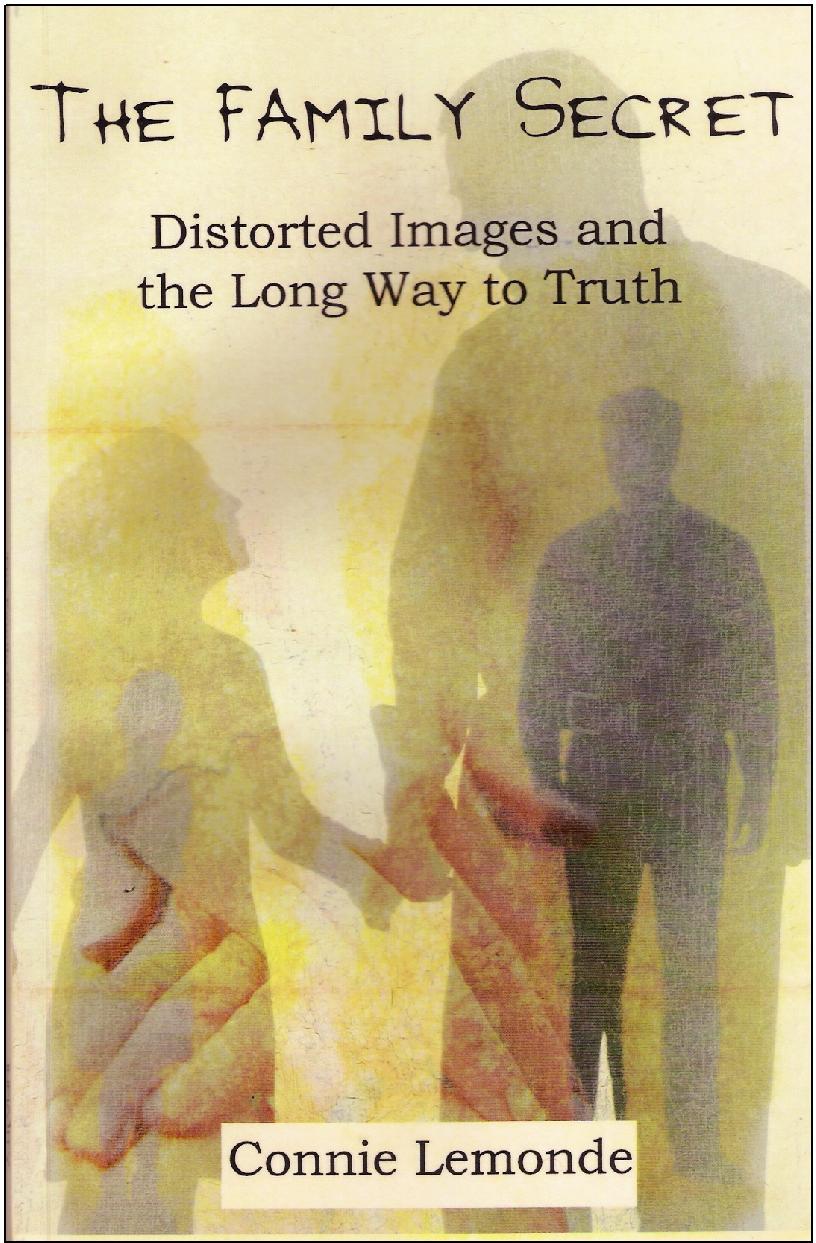
Connie LEMONDE's latest novel
Distorted Images and the Long Road to Truth
1947 - Vermont - A Canadian-American father’s “nice/bad surprise” for six-year-old Michelle never happens but becomes the family secret that leaves her with distorted images of both her parents and sweeps her away from home to a boarding school in Canada and then to New Hampshire. In Canada she meets eight-year-old JP and together they go out looking for God. Instead, they find Ivan, an ex-convict whose life is changed radically by this meeting.
In the meantime, Michelle is sent to live with her ambitious, independent Aunt Lena and is introduced to a lifestyle that she could only dream of. But she continues to long for home and for the very doubtful love of her parents. Then, at sixteen, the “family secret” is revealed to her, and she is devastated not only by what her father had been planning but also because the incident had caused her to have such twisted thoughts about her mother and father. The truth was the opposite of what she had come to believe since she was six years old.
Then, the year of her graduation from high-school, her father is imprisoned and she has to choose between living with her aunt or going back to her small home town help her mother. Her decision brings JP and Ivan back into her life and changes everyone’s course for the better.
______________________________________________________________________
to find out more about
CONNIE LEMONDE's
books
Sunday, July 02, 2006
RICARD Ancestry
Thursday, June 29, 2006
NOVEL with Franco-American & Québec backdrop
CHAPTER 1
“It’s a surprise. You’ll like it. Come on.”
August, 1947 “happened” and little Michelle’s life would never be the same again.
On that day she was humming as she grabbed a handful of grain from her blue bucket and scattered them around the chickens that were scampering all over their fenced yard. One of the hens stopped, looked straight up at the girl, and then returned to her dining. Michelle smiled back at the daring feathery creature and stooped to give her some extra food.
The girl’s father, Elphège Bellerose, had been gathering eggs in the coop when he noticed his daughter through the back exit that was still open. He quit his chore and walked to the door. For a while he stood observing his child, the only female out of five children. She was a beautiful six-year old: fair- skinned, a little tall for her age, with big, curious brown eyes framed by amazing eyelashes. The yellow pinafore dress that she was wearing over a short-sleeved white blouse was a strong complement to her long, dark brown hair that was tied in back and swished around a bit with every motion that she made.
After a few minutes, he called loudly, “Michelle, come in here!”
She jerked around and stopped short at the sight of her father, dressed only in overalls and mud boots, standing stiffly in the entrance.
The day was hot and sticky, and he drew a large handkerchief from a pocket and wiped his forehead. “Why do you look so scared?” he asked. “Did you do something wrong again?”
Michelle’s blue pail swung back and forth. “No.”
“Well, then, don’t worry. I won’t hit you. I just want to show you something.”
“What is it?”
He beckoned with his finger. “It’s a surprise. You’ll really like it. Come on.”
“A nice surprise?” the girl exclaimed excitedly, as she dropped her pail and started skipping ahead. Her father had never, ever given her anything special and she couldn’t wait to see what it was.
In the doorway, Elphège turned around and faced the front entrance as he waited.
Just as the child ran over the threshold, a loud, angry cry came from the front door that had just opened.
“What in the world are you doing?” roared throughout the whole room and the walls almost shook. Michelle braked short as her grandmother ran in waving her arms helter-skelter in the air. The woman was so incensed that her face seemed to be on fire.
Wednesday, June 28, 2006
GENETIC Disease study in QUÉBEC
Saturday, June 03, 2006
PETER USTINOV married a French-Canadian from QUEBEC
(1)
Zacharie CLOUTIER
Xainte DUPONT
1616.07.18
Saint-Jean-de-Montagne, Perche, (Orne) FRANCE
(2)
Charles CLOUTIER
Louise MORIN
1659.04.20
Québec
(3)
Zacharie CLOUTIER
Jeanne BACON
1708.05.23
Château-Richer, Montmorency County, QC
(4)
Zacharie CLOUTIER
Agnès BÉLANGER
1737.11.13
Château-Richer, Montmorency County, QC
(5)
Jean-Baptiste CLOUTIER
Marie-Louise GAGNON
1774.08.01
Beaupré, Montmorency County, QC
(6_
Louis CLOUTIER
Judith FRIGON
1809.01.23
Sainte-Geneviève-de-Batiscan, Champlain County, QC
(7)
Urbain CLOUTIER
Henriette COSSETTE
1851.03.03
Saint-Prosper, Champlain County, QC
(8)
Joseph Dauphin CLOUTIER
Joséphine LEDOUX
1889.06.25
Saint-Narcisse, Champlain County, QC
(9)
Edmond CLOUTIER
Hélène ST-DENIS
1922.05.23
St-Jean-Baptiste parish, Québec City, QC
(10)
Suzanne CLOUTIER
Peter USTINOV
1954
Friday, June 02, 2006
VERMET dit LAFORME
Antoine VERMET dit LAFORME
from St-Nicaise, FRANCE
Barbe MÉNARD
1669.08.26
Sainte-Famille, Île-d'Orléans, Montmorency County, QC
(2)
Jacques VERMETTE
Jeanne DUPIL
1706-10-25
Saint-Augustin-de-Desmaures, Portneuf County, QC
(3)
Augustin VERMETTE
Marie-Josèphte/Josette JUNEAU
1750-11-16
Saint-Augustin-de-Desmaures, Porneuf County, QC
(4)
Joseph VERMETTE
Geneviève AYOTTE
1774-09-26
St-Antoine-de-Padoue, Louiseville, Maskinongé County, QC
(5)
Jean-Baptiste VERMETTE
Marie-Anne PAGÉ
1812-11-23
St-Joseph-de-Maskinongé, Maskinongé County, QC
(6)
Norbert VERMETTE
Julie BELLEMARE
1842-09-13
St-Joseph-de-Maskinongé, Maskinongé County, QC
(7)
Norbert VERMETTE
Marie FRANCOEUR
1871-07-04
Saint-Tite, Champlain County, QC
Churches to close in SHERBROOKE, QC
Since 1995, 23 churches have been closed in the diocese of Sherbrooke.
Marie-Paule GIGUÈRE from housewife to foundress of a religious community
Thursday, June 01, 2006
KARMA and GENEALOGY
When you die the excess karma goes with you. You may be required to pay it back on the physical level six lifetimes from now, or in the very next life. Karma is the Law and cannot be denied.
St-Vincent-de-Paul Orphanage

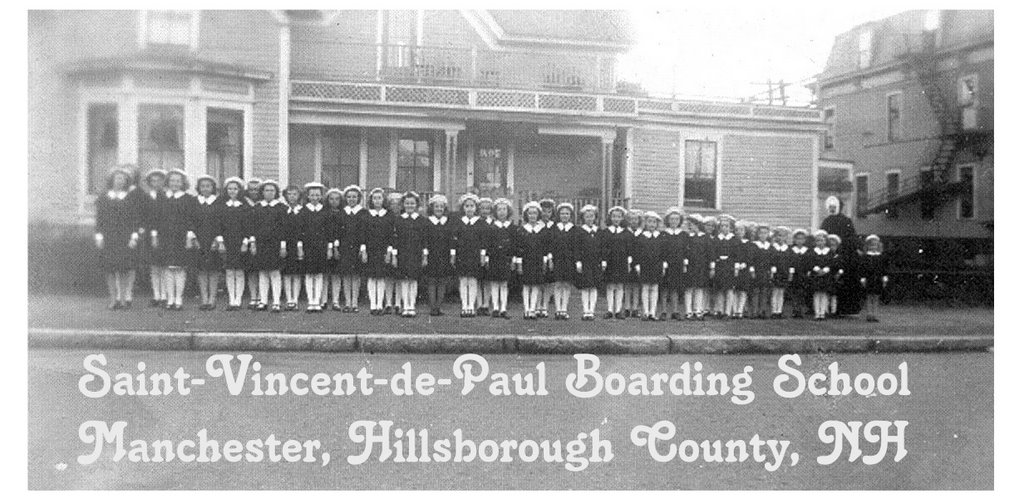
Dear Murmur, Thank you for giving me info about your blog! I had fun reviewing the stuff that you had on it. Especially meaningful for me was information that you had about the St. Vincent de Paul boarding school. My three older brothers were sent to St. Vincent for a while. My brother Bob spent the most time there. My older brother graduated and went to a regular Catholic High School in Manchester. The middle brother spent the most time there--not with the happiest of memories. But now, at least, we are all understanding the move to the boarding school! Then I was sent to the Mount for my boarding school time! Oh, well, I met the nicest bunch of young ladies there! I really loved having the time away from my family and spending it with great friends.
Thanks again for the info!
Wednesday, May 31, 2006
FAMILY SECRET
Monday, May 29, 2006
Msgr. François-Xavier CLOUTIER
CHARRON dit DUCHARME Info
The fourth edition of the Charron and Ducharme dictionary will be published in the Fall of 2005 and will include information submitted by members as well as that uncovered in France by a professional genealogist, Mr. Jean-François Viel on behalf of the Association.
This edition will be different from the previous ones (1997, 1998, 2000). Indeed, it will contain all the additional information obtained since 2000 resulting in a huge increase in size. For this reason a paper edition is no longer practical and the dictionary will be published as a CD ROM instead.
Thursday, May 25, 2006
Monthly FAMILY TREE
Friday, May 19, 2006
OPUS DEI & GENEALOGY
More info from OPUS DEI in QC
Greetings again,
Thank YOU for explaining the secular institute. Legal distinctions are
often fuzzy for me. I'll try to explain how the Prelature works from my
perspective.
First: who are we?
Opus Dei comprises a mere handful of persons in the Catholic Church, and
we live fidelity to the Magisterium. We are loyal subjects to our local
Bishop, active in our local parishes, and also engaged in varying degrees in
the civil life of our city, our country, our world. In other words we are
Mr. & Mrs. Ordinary Joe Blow.
I came into contact with the Work through a friend's invitation to an
Opus Dei Day of Recollection, which I found sane, sound, and helpful. For
years I attended these monthly Recollections, enjoying yearly spiritual
Retreats. All that I saw and heard and put into practice in my life had
positive repercussions not only on my own spiritual life but also on my
family -- my husband and children. After about ten years I decided to heed
God's call (which I had been ignoring for a few years) and become a part of
this Work of God, Opus Dei. That was thirty-one years ago.
In Opus Dei seventy percent (70%) of the members (I am called a
supernumerary) are married and live at home with their husband and family,
getting spiritual 'coaching' once a week at a nearby Centre where they go for
Confession and regular spiritual direction. We are encouraged to practice
certain norms of piety (nothing strange or different, just the traditional
practice in the Church), such as our prompt and heartfelt Morning Offering,
attendance at Holy Mass as frequently as possible during the week, devoutly
reciting one set of Mysteries of the Rosary every day (five decades) and
briefly contemplating the other three sets, saying Grace before and after
meals, reciting the Angelus or Regina Caeli at noon, spending quiet time of
your choosing in prayer every day -- half an hour in the morning, and
another half in the afternoon, fifteen minutes of spiritual reading -- Holy
Gospel and some other spiritual work. We have a particular family prayer we
say in Latin (5 minutes) that includes all our greater family intentions --
our Holy Father, Bishop, Prelate, fellow members living and dead,
benefactors, etc.and asking for the grace to be true to our calling. We are
also encouraged to practice mortification little things, in the age-old
tradition of the Church.
As you see, nothing strange.
The men's and the women's sections are completely separate to respect
freedom and autonomy, for even though married, persons do not necessarily
progress spiritually at the same rate. However, the activities are similar.
Two percent of the members are priests and the rest are comprised of
numeraries who do not marry and therefore are able to go to wherever in the
world they are needed to further the Apostolate. They are always free to go
or stay. It's by simple request. hese usually exercise their professional
work as any other professional woman in society, but make the Centre their
home, and freely contribute to the Work whatever portion of their salary
they don't need to maintain their professional life. The numeraries do
practice physical mortification in a very moderate degree, token really,
never even near any physical harm. For example they use a cilice for a
couple of hours a day (except Sunday) and once a week they use, for the
space of a Hail Mary, a knotted cord on their back. No welts, no blood
(grin).
A percentage of these unmarried women members are called by God to be
stay-at-home 'mothers' (called numerary assistants) taking care of the
houses of the Work as any mother does her home, cooking and housekeeping,
and guaranteeing the warmth of a family home to each Centre. They treasure
their contribution, and so do all the members of the Work.
Does this help Muriel, is this what you want to know? If you need
anything else, let me know.
Sorry it took so long.
God bless.
Brigid Kane (mail@opusdei.ca)
Hi,
I did not mention vows because we don't take any. Opus Dei is secular,
and our link is by simple contract. Opus Dei contracts to provide each
member with all the spiritual formation he or she needs to fulfill his/her
Baptismal commitment, one year at a time, and the person contracts to make
every effort to receive this formation and to live as a committed Catholic
for that year. Each side takes this contract seriously, and the contract is
renewed (or not) each year. It's a long (usually takes several years of
walking the way) and well-informed decision to join Opus Dei. Leaving is as
simple as a telephone call to inform the person in charge of the local
Centre that one chooses not to renew. Former members most often continue to
frequent the monthly days of Recollection, and the yearly Retreats, thereby
also staying in touch with the support group whose company they have
enjoyed. All are welcome too at any function hosted at our Centres (i.e.
doctrine classes, talks on how to improve the quality of family life, on
why modesty is important in fashion, inspirational talks by guest academics
(when speakers are 'imported' we leave a basket for voluntary contributions
to cover the charge). Everything spiritual is always free, naturally.
We are of course encouraged to live all the same virtues Holy Mother
Church asks of all her members. Every member of the Church is required to
be chaste, each according to his/her state in life. Obedience is expressed
by our willingness to receive ongoing formation, for which formation there
is no charge. Poverty is lived according to the generosity and
discretionary capability of each person. A stay-at-home mother of a large
family, a fisherman or a taxi-driver struggling to provide food for the
table do not have the same discretionary funds as a lawyer or a medical
specialist. Members come from all walks of life. What is important is
striving for sanctity right where God has placed us, and taking our family,friends, neighbors, etc. etc. etc. with us to Heaven.
Opus Dei is unique in another way. We are the first Church approved
institution that accepts non-Catholics as Cooperators and also non-Christians. We are ably assisted by many noble souls who
generously give their expertise, financial aid, and loyal support to the
multiple humanitarian enterprises world-wide that promote human dignity, and
they receive spiritual benefit. These noble souls
cooperate both by their expertise and finances with members of the Work in
multiple humanitarian enterprises world-wide, to promote human dignity,and are granted spiritual benefits.
If you have any other questions I will be glad to answer you to
the best of my ability. If there is something I don't know, I can try to
find it for you. I must warn you that there may be a delay because of the
many requests for information generated by media attention these days. You
can put the information on the blogsite if you wish. I trust your intentions are honorable (smile).
God bless.
Brigid Kane (mail@opusdei.ca)
Click on the ORANGE title above to visit the
OPUS DEI official website
OPUS DEI in QC
OPUS DEI
OPUS DEI has been in the news almost daily. I was curious to know more about their Status within the Roman Catholic Church. In the early 1960's, they were considered a SECULAR INSTITUTE; but, I've not heard that terminology used during the many broadcasts and news articles. For this reason, I wrote to the Montréal center and received the following email from Brigid Kane in response.Because Opus Dei was such a novelty in the Church there did not exist at
its inception a suitable juridical framework. Therefore for a number of
years Opus Dei wore the ill-fitting 'suit' of Secular Institute, while our
Founder and his collaborators sought a juridical framework which would
better reflect the reality of Opus Dei in the Church. The juridical
solution was the Personal Prelature.
Opus Dei is (so far) the first and only Personal Prelature, but the
Church is still young and dynamic, and the Holy Spirit continues to be
actively engaged in Her expansion and protection, so we may expect there
will be more in future.
Please join us in praying daily for our beloved Pope Benedict, all the
Bishops (particularly your own) and the priests of the whole world, that
they might be shepherds after God's own heart, and please also pray for the
Work that we all may be faithful to our Beloved Lord.
click on the ORANGE title above
and you will be linked to their official site.
Saturday, May 13, 2006
Follow the DUChARME footsteps in QC
Besides being the cradle of the french culture in North America, Québec is the homeland of all Ducharmes from the Charron dit Ducharme family. Needless to say that there is a lot to see and to do here for a member of our family wishing to find his roots. The goal of this short article is to highlight some of the places that are a must for a Ducharme to see during a trip in Québec.
Indeed, although every one of the 20 regions in Québec would deserve a visit, some are especially of interest for Ducharmes. Among these, Québec City, one of the oldest towns in North America, and the only one still surrounded with walls, Montréal, our main city, and most of all the area called Lanaudière, around the towns of Berthier and Joliette, on the North Shore of the Fleuve St-Laurent (St-Laurent River).
Lanaudière is without doubt the homeland of Ducharme families. Almost every village there is full of memories of our forefathers. Most likely your direct ancestor, the one who left Québec for the United States a few generations ago, was born in one of the following places : Berthier, Ste-Élisabeth, St-Thomas, St-Félix-de-Valois, Ste-Mélanie, St-Paul, St-Jean-de-Matha, etc. But let’s begin with the beginning.
Planning your trip
First of all, it is important for you to gather as much notes as possible on your ancestors, so you will know exactly the places that you would like to visit. Be sure to pinpoint the places where they were married or burried, for instance. Likely, the churches still exist, and it may be even possible to find the graves of some of them in old cemeteries.
Among other documents available from these offices : pocket-size guides for each region, including Québec, Montréal, and Lanaudière of course. I suggest that you ask for these handy guides, that will give you details on every town and villages, and suggest roads and tours, places to see, restaurants and hotels, etc.
Montréal.
Coming from any point in the United States, you will like to first come to Montréal, following (in the other direction) the road that your ancestor took to leave Québec for the USA. Located on an island, Montréal is a large town (2 millions inhabitants), but nevertheless the athmosphere is very friendly and safe. Don’t hesitate to take the Métro (subway) to visit the town. It’s fast and unexpensive.
I suggest that you find an hotel or a bed & breakfast not too far from the « Vieux Montréal », that is Old Montréal. Our first ancestors, Pierre Charron and his wife Catherine Pillard, landed here between 1662 and 1664. Each street in the « Vieux Montréal » has a long story; take the time to browse. But be sure to visit Notre-Dame church, on Notre-Dame street: Pierre and Catherine were married there on October 19, 1665 (that is in the first church built on the site), and also buried in the cemetery that is now just under the actual church. Also in that part of the town are the « Archives Nationales » (National Archives), where you can find actual copies of birth, marriage or death certificates of your ancestors (see below).
I suggest also that you visit "Ferme St-Gabriel", a few minutes from the Vieux Montréal. The "Filles du Roy" (King’s daughters, as Catherine Pillard was), were received there before their marriage. The house goes back to 1698 or so, and is the oldest in Montréal. Daily visits are most interesting. The museum of Pointe-à-Callières is also a must, as well as the Bonsecours Chapel, and many other places. Walk alongside the river, follow St-Paul Street, and take the time to drink a coffee (or any other beverage, for that matter!), on Place Jacques Cartier. Remember : your ancestors walked these streets in the XVII century.
Back in 1665, Pierre and Catherine’s first land in Montréal was located in the eastern part of the town, at a place known as Longue Pointe, an very early settlement on the Island of Montréal. Although there is nothing much to see now, you may like to walk in their steps, and at least stop to see this land. Take Notre-Dame street heading east, up to the spot where the autoroute 25 (highway 25) crosses the Fleuve St-Laurent : the land of Pierre and Catherine was just there. Details on this land were published in « Le Trait d’union » (volume 8, no 2).
After selling that first land, Pierre and Catherine moved to the other side of the Fleuve St-Laurent, in Longueuil, to a land that was also described in « Le Trait d’union » (volume 5, no 3). You must cross the Jacques-Cartier bridge to get into Longueui, also an old town. Take the time to walk on St-Charles Street, around St-Antoine-de-Pade church.
Lanaudière
Leaving Montréal heading toward Lanaudière, take autoroute 40 east, that will bring you in 45 minutes to Berthierville (also known as Berthier). If you have more time to spare, you can alternately take road 138 east, that will bring you to Berthier alongside the Fleuve St-Laurent. This road, the oldest in Québec, is called the "Chemin du Roy" (King's road), and your ancestors certainly took it more than once; before getting to Berthier, road 138 will bring you to Lavaltrie and Lanoraie, where may Ducharme’s lived in the past and still live today. Many antiques boutiques on raod 138, by the way.
When in Berthier, be sure to visit first Ile Dupas, one of the islands between Berthier and Sorel, that you can access to with your car. This will bring you suddenly hundred of years ago. Francois Charron dit Ducharme, son of Pierre Charron and Catherine Pillard, the first one to use the nickname Ducharme, raised all his family on a small island near Ile Dupas. This island is still known as «Ile Ducharme». Yet, unfortunately, no access by car to this island is possible. But be sure to see the church on Ile Dupas, where a few of the children of François and Marguerite were christened.
Going back to Berthierville, take a look (and visit, if possible) St-Genevieve church: almost every member of the firsts generations of Ducharmes after Francois were married there, for almost a century. A few other places are worth a visit in Berthier, like the Cuthberth Chapel. Old houses in Berthier (and all Lanaudière in fact) are typical of French Regime house-building. The villages themselves are also typical : they are built around the church, which is often a work of art by itself.
From Berthier, follow Route 345 heading toward Ste-Élisabeth. The road follows a river, which is called Rivière Bayonne. Just after leaving the city of Berthierville, there is a covered bridge on Rivière Bayonne, to your right, that is nice to see. The church in Ste-Élisabeth is new, the old one having burned in 1955 or so. But beside you will see the old presbytery and, behind, the cemetery, where many members of our families are burried.
Keep on road 345, heading for St-Félix-de-Valois. This must be the place in the world where the largest number of Ducharme lived and died. Take a look at the church, and also at the cemetery behind, just to check if I am right! St-Félix church is very typical of churches in Québec. Take some time to walk in the village.
From St-Félix, you can take road 131 north to visit St-Jean-de-Matha, Ste-Mélanie (where our member and friend Doug Ducharme’s ancestor came from at the end of the XIX century), a very nice village on road 348, or go to any other villages in the area. After browsing, many roads will bring you to Joliette, the main town in the area. The cathedral is very impressive, for a town of that size. While there, you can visit the art museum, specializing in religious art.
From Joliette, you can take road 31 south to go back to autoroute 40 or road 138. From there, you can come back to Montréal, or go east to Québec City (about 2 hours from Berthier). The purpose of this article is not to described Québec City, but it is certainly a must to visit. While in Québec City, be sure to go around the Ile d’Orléans, in front of Québec. From this place, you will see Québec’s Cap Diamant exactly like our ancestors coming from France saw it 350 years ago.
Other regions to see.
As said before, most Ducharme's come from Lanaudière. Most, but not all. For instance, a few lived in St-Eustache, north-west of Montréal : they were Louis-Joseph Ducharme, son of Louis and Scholastique Renaud, who married there Véronique Presseau in 1802, and their own son, Louis Ducharme, who married Marie-Anne Leclair in 1828. Louis and Marie-Anne left Québec soon after the 1837 rebellion, Louis being a patriot. They are the ancestors of many Ducharmes from Wisconsin, including our member and friend Craig Ducharme.
The actual St-Eustache church is exactly as it was then : check the marks of the bullets on the frontwall. Likely, Both Louis and his son were inside when the British gave the final assault. Take the time to walk in the old village.
Genealogical researchs.
While visiting Montréal, you may want to do some researchs on your ancestors. One of the best places to do so are the « Archives nationales du Québec ». Our national archives are kept in different locations, but documents for Montréal and Lanaudière areas are kept in Montréal. The Montréal’s office address is 535 Viger Street east, in Old Montréal.
You will find there microfilms of all parish registers up to 1900, marriage contracts, wills, birth, marriages and burials repertories, genealogical dictionaries like Tanguay and Jetté, and many other documents. Researchs are free, and employees are very helpfull. You can make copies of most documents for a dollar or two (canadian dollars, that is), or even for a few cents when microfilms are concerned.
Conclusion.
Of course, these are only a few notes. There are many other interesting places to see, and of course many things to do. Is your ancestors are mainly from Québec, you may also want to look for other sides of your family. This will bring you in other regions.
Wednesday, May 10, 2006
Franco-American wins 3rd prize in poetry contest
CONNIE LEMONDEa self-portrait
and Everywhere In-between
Sunday, May 07, 2006
DUCHARME Families in North America
VARIOUS DUCHARME FAMILLIES
As far as I know, all Ducharme families now living in North America have their origins in Québec. It would be easy to link them to their ancestor, if there was only one source.
This is not the case. At least 5 completely different sources are known. In this text, we will talk briefly about each of these, and give some (limited) clues as where to look for them.
These informations are based on respected books, such as René Jetté's "Dictionnaire des familles du Québec", and also on my own experience as a searcher for those famillies.
1)Fiacre Ducharme's family
He came to Nouvelle France [New France] in 1653 and settled in Montréal. He brought with him the original name, « Ducharme », and was the only one to do so.
His sons were fur traders and voyageurs, so you can find his descendants very early after 1700 around the Great Lakes and alongside the Mississippi. For instance, Dominique Ducharme, the first person to receive a land in Wisconsin around 1795, was one of his descendant.
Although this family is not by far the most numerous, if your ancestors have been in these areas for a very long time, there is a good chance that Fiacre is your ancestor.
2) Louis Tétreau's family
Louis came from France around 1662, and settled in Trois-Rivières. One of his son Joseph, took the nickname Ducharme around 1700, for reasons not known. Descendants are numerous along the Richelieu river, and there are important groups in Louisiana and New England.
3) Pierre Charron's family.
Pierre got in Montréal in 1662. He never wore the name Ducharme, but one of his son, François, took the nickname in 1701 and all his descendants use it. 40 to 50% of all Ducharme are from this origin.
You will find them in Québec in a area called Lanaudière (around Berthier, Joliette, etc.). An important group went to Manitoba around 1780, others to Wisconsin and New England from 1840 on. You can find them all over North America now.
More details on Pierre Charron’s family on the « Association des Charron & Ducharme » website.
4) Sébastien Provencher's family.
Sébastien came in Québec around 1672. He never wore the name Ducharme but one of his son, Jean-François, took that nickname also around 1701, and all descendants of Jean-François use it today. They live in Québec around Bécancour and Trois-Rivières, and many went to New-England after 1840.
5) Francois Repoche's family
Francois came in around 1669, and settled in Québec City. He used the nickname Ducharme, and many of his descendants did the same. I don't know much about them, except for the fact that many went to Maine after 1840.
Of course, much more could be said: this is only a brief notice on Ducharme famillies. As president of the "Association des Charron & Ducharme", I will gladly try to help people looking for their own Ducharme ancestors.
Pierre Ducharme, président
Association des Charron & Ducharme inc.
[TEXTE PUBLIÉ À L’ORIGINE LE 2000/06/10 DANS « DUCHARME FAMILY GENEALOGY FORUM ». Message No 151]
Click on the ORANGE title above to go to the CHARRON-DUCHARME Association.
The Franco-American Connection
Franco-American Connection
Wednesday, May 03, 2006
"Rehabilitated" Marriages
REHABILITATION of MARRIAGE
"Mariage réhabilité"
While researching family history, I’ve often come across the term, « réhabilité » in Québec marriage registries. Although I questioned a French-Canadian priest about the term, he couldn’t explain its meaning. It was obvious that the original marriage had not been accepted by the Catholic Church; but, I couldn’t find the story behind it. Thankfully, one a.m. I received the following e-mails :
Busy with the liturgy of the Mass, the priest failed to notice the foursome sitting close to one another in the rear pew. The young lady gazed at the youth beside her in rapt adoration, hardly aware of the celebrant at the altar. From time to time her companion gave her hand a reassuring squeeze. Unbeknown to the priest and those around them, the young couple were being married in a rite known as " le marriage à la Gaumine". Long before the Catholic settlement in Canada the church had been plagued by the practice of those who, for some reason or another, could not be married within the laws of the Church. The problem of clandestine marriages caused the Council of Trent to declare that a marriage could be valid only when reformed by a priest in the presence of two witnesses. The requirements of the Council were enacted into civil law by the DeBlois ordinance of 1579 and by the legal decree of Tametsi. The passage of the law and the enforcement of it are two different things, the decrees make little impression on those who wished to sidestep them. They quickly found ways to evade the restrictions. The most popular form of evasion was to marry "a la Gaumine", so-called after a certain Mr. Gaumine who had devised the ruse to circumvent both church and legal procedures. Using this method, the engaged couple and their two witnesses would meet at church and, during the Mass, would make their marital commitment to one another in the presence of the two witnesses, but without the knowledge of the priest. The custom of the marriage "a la Gaumine" came to New France with the immigrants and there were those who, in their homeland, resorted to the irregular and illegal ceremony for various reasons. The practice persisted despite the fact that church and legal authorities used every kind of tactic to prevent it. It became such a vogue that in 1717 the Bishop of Quebec issued a mandate to anyone contracting a marriage "a la Gaumine" would be subject to excommunication. He cited flouting of church authority, desecration of the church's sacred ceremonies and a sidestepping of parental permission. To add emphasis to his order, he warned that witnesses to such marriages would also face excommunication. In some dictionaries, such as Tanguay etc. and in some historical reporting one will find recorded accounts of such marriages "a la Gaumine". At Boucherville, the marriage of Jean Desnoyers and Therese Menard was celebrated. A few years previously, unknown to their missionary, Rev. de Francheville, who was celebrating Mass, they had married themselves "a la Gaumine". In 1727, while the pastor of Batiscan celebrated the Mass, a Daniel Portail and AntoinetteLangy became husband and wife "a la Gaumine". At St.Jean Port-Joli a young couple that had been refused a dispensation took the matter in their own hands. They erected a makeshift altar at home and while a friend impersonated a priest celebrating Mass, they married one another in a mock ceremony. The repercussions were swift and drastic. The erring couple were excommunicated, as were those who acted as witnesses to the affair. Twenty days the couple repented and returned to the embrace of the church and its legal requirements. This episode marked the end of the "marriage a la Gaumine" and the custom became a quaint bit of history; the year was 1774....
Ref: "The Genealogist", The American-Canadian Genealigist, Manchester, N.H. done by Edwin J. Allard, a retired N.Y. columnist who now writes on a freelance basis. Extract from Jacques Lacoursière's "Histoire populaire du Québec"
Another person wrote:
A third emailer explained in French:
Pour l'église catholique,"Réhabiliter un mariage" veut dire que le mariage avait été célébré de la meilleure manière possible dans les circonstances, mais qu'il y avait eu un empêchement de se conformer à toutes les exigences de l'église, soit la présence d'un prêtre célébrant, la présence des conjoints, la présence des deux témoins, la publication des bans de mariage, la divulgation des empêchements après cette publication de ban, ou tout autre circonstance d'empêchement de se conformer à la coutume de Paris. Les meilleurs exemples viennent des Acadiens en exil. Ils se mariaient devant une personne désignée
par un prêtre de leur ancienne paroisse. Cette personne servait d'officiant et enregistrait l'union dans un document personnel qui devenait officiel pour la communauté. Toutes ces unions devaient être reconnues par une réhabilitation de l'église à la première opportunité. La coutume de Paris voulait que le mariage soit célébré par un prêtre qui enregistrait l'union dans les régistres paroissiaux après publication de 3 bans, faite à 3 messes précédant immédiatement le mariage. Les conjoints devaient être présents avec chacun un témoin: donc ça prenait 5 personnes au moins, soit l'officiant, les deux conjoints et les deux témoins, et le tout devait être confirmé par écrit dans le régistre qui devait être signé par tous si possible, sinon par l'officiant au moins, qui agissait alors comme représentant civil. Quand le mariage était fait "à la Gaumine", l'enregistrement était fait le plus tôt possible, au plus tard au baptême du premier enfant par le prêtre qui baptisait le bébé et qui ne pouvait refuser de le faire. Je ne suis pas un expert en cette matière, mais ce sont les pensées qui me viennent à l'esprit.